
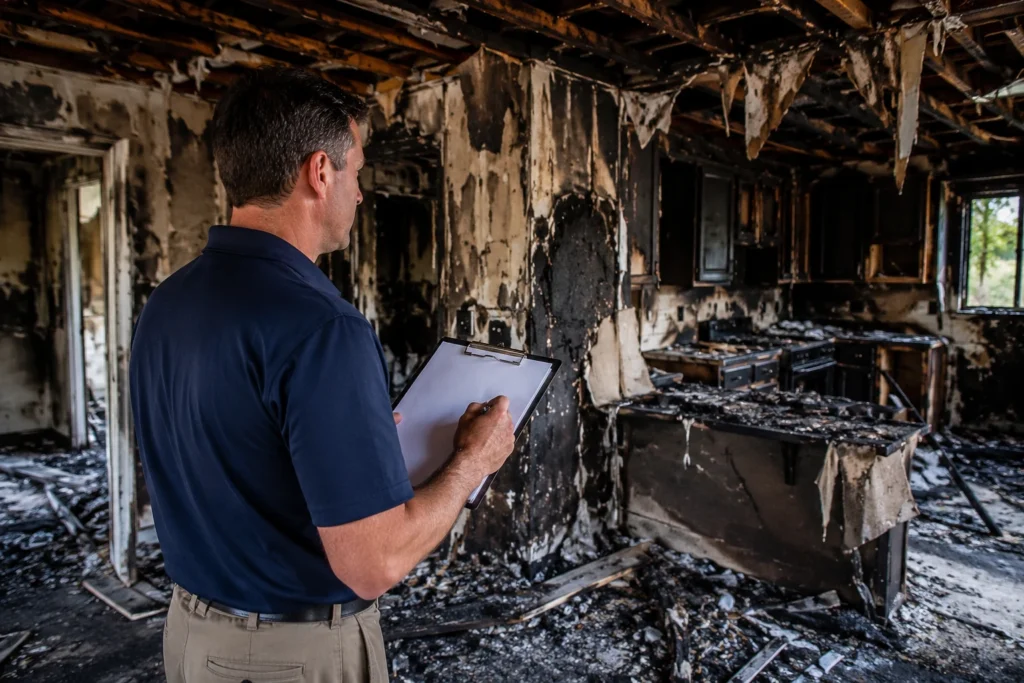
A house fire can turn your life upside down in a matter of minutes. One moment you’re enjoying a normal day. The next, you’re dealing with smoke-filled rooms, damaged belongings, temporary housing, and a mountain of insurance paperwork. During this difficult period, a fire insurance adjuster often becomes one of the most important professionals involved in your recovery.
Unfortunately, many homeowners don’t fully understand how the claims process works until they are forced to navigate it themselves. That’s a problem. Fire claims are among the most complicated property insurance claims because they often involve structural damage, smoke contamination, water damage from firefighting efforts, personal property losses, and rebuilding costs that can quickly escalate. For homeowners in Rockwall, understanding the role of a fire insurance adjuster can help prevent costly mistakes and improve the chances of receiving a fair settlement. This guide explains what a fire insurance adjuster does, how fire claims work, common challenges homeowners face, and what steps you can take to protect your interests after a devastating loss.
What Is a Fire Insurance Adjuster?
A fire insurance adjuster is a professional responsible for evaluating damage caused by a fire and helping determine the value of an insurance claim. Their job includes inspecting the property, documenting losses, reviewing insurance coverage, estimating repair costs, and helping move the claim through the adjustment process. However, not all adjusters represent the same party. That distinction is critical.
Types of Fire Insurance Adjusters
There are generally three types of adjusters involved in property insurance claims.
| Type | Represents | Paid By |
| Staff Adjuster | Insurance Company | Insurance Company |
| Independent Adjuster | Insurance Company | Insurance Company |
| Public Adjuster | Policyholder | Policyholder |
A staff adjuster works directly for the insurance company. An independent adjuster works under contract for insurance carriers and may handle claims for multiple insurers. A public adjuster represents the policyholder rather than the insurance company. Understanding who an adjuster represents is one of the most important things a homeowner can learn after a fire.
What Does a Fire Insurance Adjuster Do?
Many people assume a fire insurance adjuster simply inspects the damage and writes an estimate. The reality is much more involved.
Inspecting Fire and Smoke Damage
The adjuster’s first responsibility is evaluating the scope of damage.
This may include:
- Structural damage
- Burned materials
- Smoke contamination
- Soot residue
- Water damage
- Electrical damage
- HVAC contamination
- Roofing damage
Some damage is obvious. Other damage is hidden behind walls, inside ductwork, or within insulation systems.
Documenting Property Losses
Fire claims often involve substantial personal property losses.
Adjusters may evaluate:
- Furniture
- Electronics
- Appliances
- Clothing
- Tools
- Jewelry
- Home office equipment
- Collectibles
This process requires detailed documentation and often becomes one of the most time-consuming portions of a fire claim.
Reviewing Insurance Coverage
A fire insurance adjuster also reviews policy provisions to determine available coverage.
Coverage may include:
- Dwelling repairs
- Detached structures
- Personal property
- Additional Living Expenses (ALE)
- Debris removal
- Code upgrades
- Emergency mitigation
Every policy is different. Coverage limits and endorsements can significantly affect the final settlement.
Estimating Repair Costs
Estimating reconstruction expenses requires evaluating:
- Labor costs
- Material pricing
- Demolition expenses
- Permit fees
- Contractor overhead
- Specialized restoration services
Even small differences in estimating methods can create large differences in claim values.
Why Fire Insurance Claims Are More Complicated Than Most People Expect
Most homeowners assume fire claims revolve around replacing burned materials. Unfortunately, fire losses are rarely that straightforward.
Smoke Damage Extends Beyond Burned Areas
Smoke can travel throughout a structure within minutes.
It may affect:
- Attics
- HVAC systems
- Insulation
- Flooring
- Wall cavities
- Personal belongings
Homes with limited burn damage can still require extensive smoke remediation.
Water Damage Creates Additional Problems
Firefighters use water to save structures. That water often creates secondary damage.
Affected areas may include:
- Drywall
- Flooring
- Framing
- Cabinets
- Electrical systems
Without proper drying, moisture-related problems can continue long after the fire is extinguished.
Building Codes Increase Reconstruction Costs
Many homeowners discover that rebuilding involves more than simply replacing what existed before. Modern building codes may require upgrades involving:
- Electrical systems
- Plumbing systems
- Roofing assemblies
- Energy efficiency standards
- Structural improvements
These costs can dramatically affect claim values.
Complex Damage Investigations
Large fire losses often resemble a complex investigation. Multiple experts may become involved, including engineers, restoration specialists, contractors, and environmental consultants. In some cases, the process can feel similar to a forensic engineering analysis, where professionals examine evidence to determine the full extent of damage, identify hidden issues, and develop accurate repair recommendations.
Personal Property Claims Take Time
Contents inventories can be overwhelming. Many homeowners underestimate how many items they own until they are asked to create a detailed inventory after a fire. A family that has lived in the same home for twenty years may need to document thousands of individual items.
Common Problems Homeowners Face During Fire Insurance Claims
Fire claims often involve high-dollar losses. When significant money is involved, disputes can occur.
Undervalued Damage Estimates
Not all inspections identify every damaged component.
Hidden damage frequently includes:
- Smoke contamination
- Damaged insulation
- Electrical hazards
- Structural weakening
- HVAC contamination
Missing these items can reduce claim value substantially.
Delayed Claims
Large losses require extensive documentation and review.
Delays may occur because of:
- Engineering evaluations
- Contractor scheduling
- Additional inspections
- Coverage investigations
- Documentation requests
Unfortunately, delayed claims often create additional stress for displaced families.
Missing Items in Contents Inventories
Many homeowners forget belongings during the inventory process.
Commonly overlooked items include:
- Garage contents
- Holiday decorations
- Storage room items
- Tools
- Sporting equipment
- Small appliances
These omissions can add up quickly.
Repair Versus Replacement Disputes
One common disagreement centers on whether damaged materials can be repaired or should be replaced.
Examples include:
- Cabinets
- Flooring
- Roofing materials
- Electrical systems
The answer often affects claim value significantly.
Signs You May Need a Public Adjuster
Not every fire claim requires professional representation. However, certain situations often justify additional assistance.
Major Fire Damage
Large losses involve extensive documentation and complicated valuation issues. The greater the loss, the more important accurate claim preparation becomes.
Low Settlement Offers
If contractor estimates differ substantially from the insurer’s estimate, further review may be appropriate. Large discrepancies deserve attention.
Partial Claim Denials
Coverage disputes often involve:
- Smoke damage
- Water damage
- Code upgrades
- Personal property
- Additional Living Expenses
Understanding policy language becomes increasingly important in these situations.
Overwhelming Documentation Requirements
Fire claims demand significant time and effort. Many homeowners simply do not have the capacity to manage every aspect of a major claim while also recovering from the emotional impact of a fire.
Benefits of Hiring a Public Adjuster for Fire Damage Claims
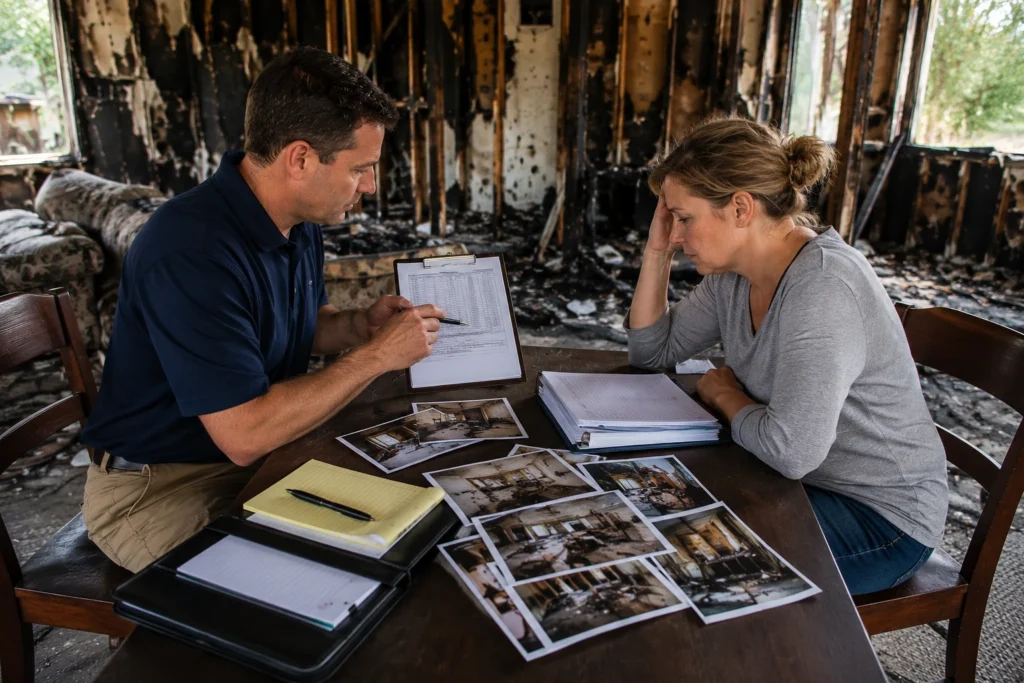
Public adjusters represent policyholders throughout the claims process. Their role focuses on protecting the homeowner’s interests.
Independent Evaluation
An independent review may identify:
- Additional damage
- Missing estimate items
- Code requirements
- Undervalued repairs
A second opinion can be valuable in complex losses.
Comprehensive Documentation
Strong claims rely on strong documentation.
This often includes:
- Photographs
- Expert reports
- Contractor estimates
- Contents inventories
- Moisture assessments
- Smoke testing
Negotiation Support
Insurance negotiations can be intimidating. Experienced professionals understand claim valuation methods, documentation requirements, and policy provisions that influence settlements.
Reduced Stress
This benefit is often overlooked. Managing inspections, paperwork, and negotiations can consume hundreds of hours during a large loss. Professional assistance allows homeowners to focus on rebuilding their lives. Is a Public Adjuster Worth It?
Many homeowners eventually ask themselves, “Is a Public Adjuster Worth It?” The answer often depends on the size and complexity of the loss. For minor claims, homeowners may feel comfortable handling the process themselves. However, when a fire causes significant structural damage, extensive smoke contamination, or substantial personal property losses, professional representation can help ensure the claim is thoroughly documented and accurately valued.
The Fire Insurance Claim Process Step by Step
Step 1: Ensure Safety
Protect occupants first. Never enter a damaged structure until authorities determine it is safe.
Step 2: Notify Your Insurance Company
Report the loss as quickly as possible.
Provide:
- Date of loss
- Property address
- Contact information
- Basic loss details
Step 3: Secure the Property
Temporary measures may include:
- Board-up services
- Roof tarping
- Water extraction
- Temporary fencing
Protecting the property from additional damage is important.
Step 4: Document Everything
Take photographs before cleanup begins whenever possible.
Capture:
- Structural damage
- Smoke damage
- Contents losses
- Water damage
- Exterior damage
Documentation becomes the foundation of the claim.
Step 5: Meet With the Fire Insurance Adjuster
During inspections:
- Ask questions
- Take notes
- Request copies of estimates
- Maintain records
Organization helps throughout the process.
Step 6: Review Settlement Documents Carefully
Never rush to accept estimates without review. Compare repair estimates against contractor proposals and restoration reports.
Step 7: Begin Reconstruction
Once claim issues are resolved, repairs and rebuilding can move forward.
What Fire Damage Is Typically Covered?
Most homeowners policies provide coverage for several categories of fire-related damage.
Structural Damage
Coverage often includes:
- Roofing
- Walls
- Flooring
- Framing
- Cabinets
- Built-in fixtures
Smoke Damage
Coverage may include:
- Smoke cleaning
- Odor removal
- HVAC cleaning
- Surface restoration
Water Damage From Firefighting Efforts
Coverage often extends to:
- Wet drywall
- Damaged flooring
- Water extraction
- Drying services
Personal Property
Coverage may include:
- Furniture
- Electronics
- Appliances
- Clothing
- Tools
Additional Living Expenses
When a home becomes uninhabitable, policies may cover:
- Hotels
- Rental homes
- Meals
- Laundry expenses
- Transportation costs
Debris Removal
Many policies provide coverage for demolition and debris removal following a fire.
What Is Usually Not Covered?
While coverage is often broad, exclusions exist.
Maintenance Issues
Insurance typically does not cover:
- Wear and tear
- Deferred maintenance
- Existing deterioration
Intentional Acts
Deliberately caused losses are generally excluded.
Certain Policy Exclusions
Every policy contains exclusions and limitations. Reviewing policy language carefully is essential.
Underinsured Losses
If rebuilding costs exceed policy limits, homeowners may face out-of-pocket expenses.
Fire Insurance Adjuster vs Public Adjuster
| Feature | Insurance Company Adjuster | Public Adjuster |
| Represents | Insurance Carrier | Policyholder |
| Paid By | Insurance Carrier | Policyholder |
| Evaluates Damage | Yes | Yes |
| Negotiates Claims | Yes | Yes |
| Goal | Resolve Claim for Carrier | Maximize Recovery for Insured |
Both professionals play important roles. However, they represent different interests. Understanding that distinction can help homeowners make informed decisions.
Why Local Experience Matters in Rockwall Fire Claims
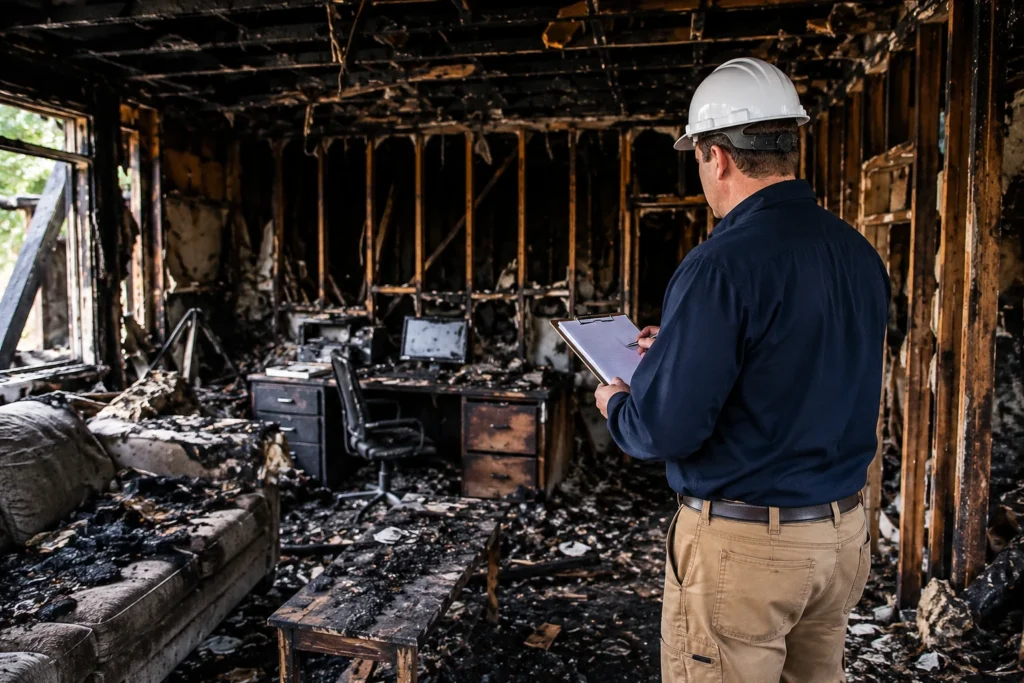
Local knowledge can make a difference. For homeowners in Rockwall, reconstruction costs, permitting requirements, contractor availability, and regional construction practices all affect fire claims.
Understanding Local Costs
Material pricing and labor rates vary significantly across markets. Local experience helps create realistic reconstruction estimates.
Familiarity With Building Requirements
Code compliance frequently affects rebuilding expenses. Professionals familiar with local requirements may identify costs that others overlook.
Relationships With Local Contractors
Established relationships with contractors, engineers, and restoration specialists can help streamline claim evaluation and repairs.
How to Choose the Right Fire Insurance Adjuster
Verify Licensing
Always confirm licensing and professional credentials.
Review Fire Claim Experience
Fire losses differ from many other property claims. Experience matters.
Ask About Documentation
Strong documentation often produces stronger claims.
Understand Fee Structures
Transparency is important. Ask questions before signing agreements.
Review References
Past client experiences can provide valuable insight.
Schedule a Consultation
A consultation often reveals whether the professional is a good fit for your needs.
Conclusion
A house fire is one of the most challenging events a homeowner can experience. The damage is often extensive. The emotional impact can be even greater. A qualified fire insurance adjuster plays a critical role in evaluating losses, documenting damage, reviewing coverage, and helping move a claim toward resolution. Understanding how the process works allows homeowners to make informed decisions and avoid costly mistakes.
Whether you’re dealing with smoke contamination, structural damage, water damage, or extensive personal property losses, preparation and documentation matter. Professional guidance can make a substantial difference in the outcome of a claim. For homeowners in Rockwall, taking the time to understand your rights, your coverage, and your options can help protect your financial recovery after a fire. When everything feels uncertain, knowledge becomes one of the most valuable tools you have.
FAQs
A fire insurance adjuster evaluates fire-related damage, reviews policy coverage, and helps determine the value of an insurance claim.
You should report the claim as soon as it is safe to do so. Early reporting helps begin the documentation and inspection process quickly.
In many cases, yes. Coverage often includes cleaning, odor removal, and restoration of smoke-damaged areas and belongings.
Most homeowners policies cover water damage caused by efforts to extinguish a covered fire, subject to policy terms and limits.
Keep photographs, receipts, contractor estimates, correspondence, and records of temporary living expenses related to the loss.
Yes. Homeowners generally have the right to select their preferred contractor for restoration and reconstruction work.
An insurance company adjuster represents the insurer, while a public adjuster represents the policyholder during the claims process.
The timeline varies depending on the severity of the damage, documentation requirements, and whether disputes arise during the claim.
Yes. Claims may be denied if exclusions apply, policy conditions are not met, or the insurer determines the loss is not covered.
For large or complex losses, a public adjuster may help document damages, review estimates, and negotiate a more accurate claim settlement.